
Budget Camera Guide for 24/7 Aquarium Live Streaming
Abstract: Want to use a low-power camera supporting the RTSP protocol to create a 24/7 slow livestream for your small fish tank? Based on actual trial-and-error experience, this article analyzes the key points for purchasing a camera capable of clearly filming a 30cm fish tank within a budget of around 200 RMB, specifically the “focusing” issue that is most easily overlooked.
Keywords: Fish Tank Camera, Slow Livestream, RTSP Protocol, Smart Home, Network Camera, Focal Length Selection, Manual Focus, ZWPlayer
I. Clarifying Requirements: We Need More Than Just a Camera
To build a fish tank slow livestream, the core requirements are as follows: Clear Imaging: The core goal is to capture clear details inside a 30cm small fish tank (fish, aquatic plants, aquascaping). Support for RTSP Protocol: This is the technical key. The RTSP protocol allows RTSP web players like ZWPlayer to directly pull the video stream, enabling seamless web live stream embedding. Low Power Consumption: Requires 7x24 hours of uninterrupted operation; low power consumption means greater stability and electricity savings. Affordable Enough: Budget controlled around 200 RMB; as a personal hobby project, costs need to be strictly controlled.
Ordinary home surveillance cameras on the market are often designed to monitor scenes ranging from a few meters to over ten meters away. Using them directly to film a fish tank often results in poor compatibility.
II. Core Parameter Analysis: Why is Focal Length the First Step?
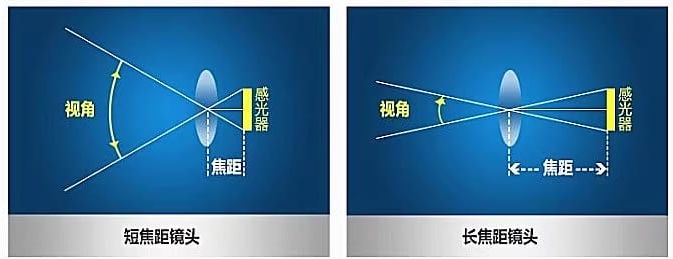
- Focal Length: Determines Your “Field of View” Focal length is the first threshold for selection. Simply put:
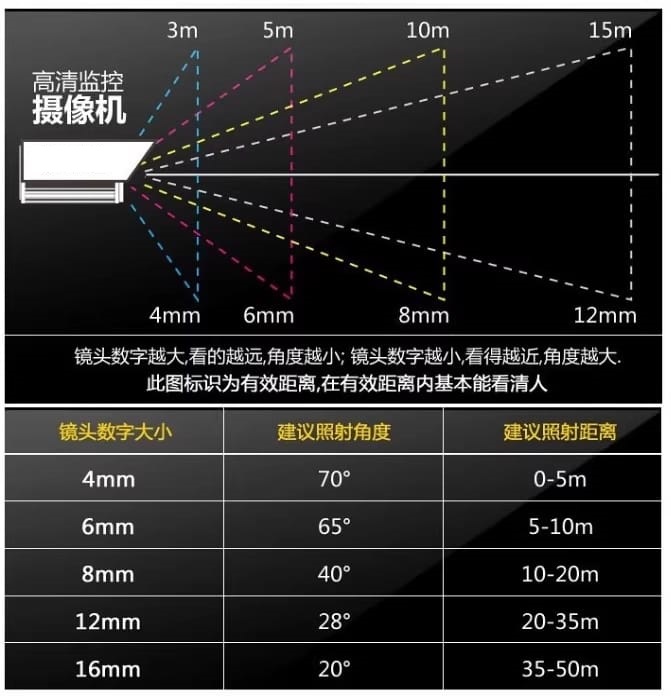
Small Focal Length (e.g., 2.8mm): Wide field of view, suitable for shooting close-range, large-area scenes. For a small fish tank, a 2.8mm or 4mm focal length is the first choice to ensure the entire tank fits within the frame. Large Focal Length (e.g., above 6mm): Narrow field of view, suitable for shooting specific targets at a distance. If used for a fish tank, it results in “tunnel vision,” showing a partial view.
Conclusion: For purchasing for a small fish tank, prioritize cameras with a 2.8mm or 4mm focal length. The following is a comparison of long and short focal length fields of view:
- Focusing Function: The Key to Determining “Clear Imaging”! (Easy Pitfall) This is the most core reminder of this article. Many entry-level cameras are fixed-focus cameras; their focal plane is fixed, usually optimized for distances of several meters to ten meters.
The Problem: According to the physical imaging formula 1/f = 1/u + 1/v, when the focal length f is fixed and the object distance u (distance from the fish tank to the lens, e.g., 10cm-30cm) changes significantly, the image distance v also needs to be adjusted accordingly to form a clear image. Fixed-focus cameras cannot adjust v, resulting in the image always being out of focus when filming a close-range fish tank, leading to blurriness.
Personal Experience: I initially chose a popular model like the TP-LINK TL-IPC341P (2.8mm focal length), but precisely because it has a fixed focal plane, the 30cm fish tank footage was very blurry and could not meet the requirements.
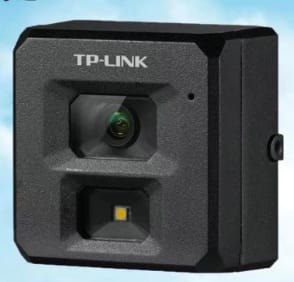
The Solution: Choose a camera that supports manual focus.
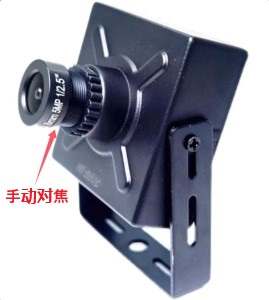
As shown in the schematic, the lens of this type of camera can be fine-tuned by rotating, thereby changing the image distance v, allowing close-range objects to fall clearly on the focal plane.
III. Buying Advice and Practical Guide
Based on the above analysis, your shopping filter criteria should be very clear:
Step 1: Search Keywords. Use “2.8mm network camera” or “4mm surveillance camera” on e-commerce platforms. Step 2: Core Filtering. Carefully check the product details page or consult customer service directly to confirm two points:
Does it support the RTSP protocol? (Usually listed under “Advanced Features” or “Protocol Support” on the details page) Does it support Manual Focus? (It is best to find a product schematic similar to the rotatable lens above)
Step 3: Price Filtering. Set the price range between 100-200 RMB. In this range, there are a large number of “common mold” products that meet the first two conditions, offering high cost-performance.
Final Solution: I found a 3.6mm camera with manual focus functionality on Taobao. It was cheaper than the TL-IPC341P I previously had issues with. After fine-tuning the focus by rotating the lens, the view inside the fish tank was very clear.
IV. Summary
Choosing a livestream camera for a small fish tank is not something that can be solved by “just buying any surveillance camera.” Within a limited budget, you need to avoid the pitfall of “fixed-focus cameras.” Remember this formula: Small Focal Length (2.8mm/4mm) + Manual Focus Function + RTSP Protocol Support = The perfect fish tank livestream camera. After choosing the right camera, combined with a web player like ZWPlayer, you can easily build a stable, clear 24-hour fish tank slow livestream and share your underwater world with friends.